Glo Skin Beauty C-Shield Tinted Moisturizer Review 2026
Tinted moisturizers promise a lot. They claim to replace your foundation, your sunscreen, and half of your morning routine. Most of them fail at least one of those jobs.
The Glo Skin Beauty C-Shield Tinted Moisturizer sits in the premium end of that category. It carries an SPF 30 rating, a vitamin C derivative, and a squalane base. It also carries a price tag near fifty dollars.
I wore this product daily for several weeks across humid mornings, dry office air, and one very sweaty afternoon. This review covers the texture, the shade range, the wear time, and the parts that genuinely annoyed me. No sugar coating.
In a Nutshell:
- The finish looks like real skin. This tint gives a soft dewy glow rather than a matte mask. Photos show texture, not a flat film. People with normal to dry skin will love this. Oily skin types will need powder by lunch.
- Coverage stays sheer. The tint evens out redness and dulls mild discoloration. It will not hide active breakouts, dark undereye circles, or strong melasma. You still need concealer for those areas.
- The SPF combines mineral and chemical filters. Zinc oxide sits at a high percentage alongside avobenzone and octisalate. That blend delivers broad spectrum coverage with far less white cast than a pure mineral formula.
- The ingredient list is genuinely good. Squalane, glycerin, argan oil, bisabolol, chamomile, and tetrahexyldecyl ascorbate work together. The formula skips fragrance and alcohol, which matters for sensitive skin.
- Ten shades is not enough. The range spans fair to deep, but the gaps are wide. Anyone with a strong olive or red undertone may struggle to find an exact match.
- The price hurts. At around fifty one dollars for a small tube, this is a splurge. The quality justifies it for some. Others will find similar results for half the cost.
What Is Glo Skin Beauty C-Shield Tinted Moisturizer?

Last update on 2026-08-23 / Affiliate links / Images from Amazon Product Advertising API Some of the links on this website are affiliate links, which means that at no additional cost to you, I earn a commission if you click through and make a purchase. I only recommend products and services that I believe will add value to my readers. Thank you for your support!
Glo Skin Beauty is a professional skincare brand. Estheticians and medical spas sell it. That background shows in how this product is built.
The C-Shield Anti Pollution Moisture Tint bundles three functions into one tube. It hydrates like a moisturizer. It protects like a sunscreen. It tints like a light foundation.
The brand markets it as a three in one formula. That claim is fair. The product genuinely replaces separate steps for people who prefer a short routine.
The “C” in the name points to vitamin C. Glo uses tetrahexyldecyl ascorbate, an oil soluble and stable vitamin C derivative. This form penetrates skin well and resists oxidation better than pure ascorbic acid.
The “Shield” part refers to environmental defense. The formula targets UV rays, blue light from screens, and airborne pollution. Antioxidants like vitamin E and argan oil support that goal.
Key specifications at a glance: SPF 30 broad spectrum, oil free hydration, ten shades, reef conscious filters, and a fragrance free base. The tube holds either 1.4 ounces or 1.7 ounces depending on the retailer listing.
The texture is a thin lotion. It pours easily and spreads without dragging. That matters because heavy sunscreen textures tend to pill under makeup.
Glo positions this as an everyday product rather than a beach sunscreen. It is not water resistant. Keep that in mind before you swim in it.
Unboxing Experience and First Impressions
The packaging arrived in a slim white carton. Clean typography, no plastic wrap, no excessive filler. The box felt sturdy enough to survive shipping without damage.
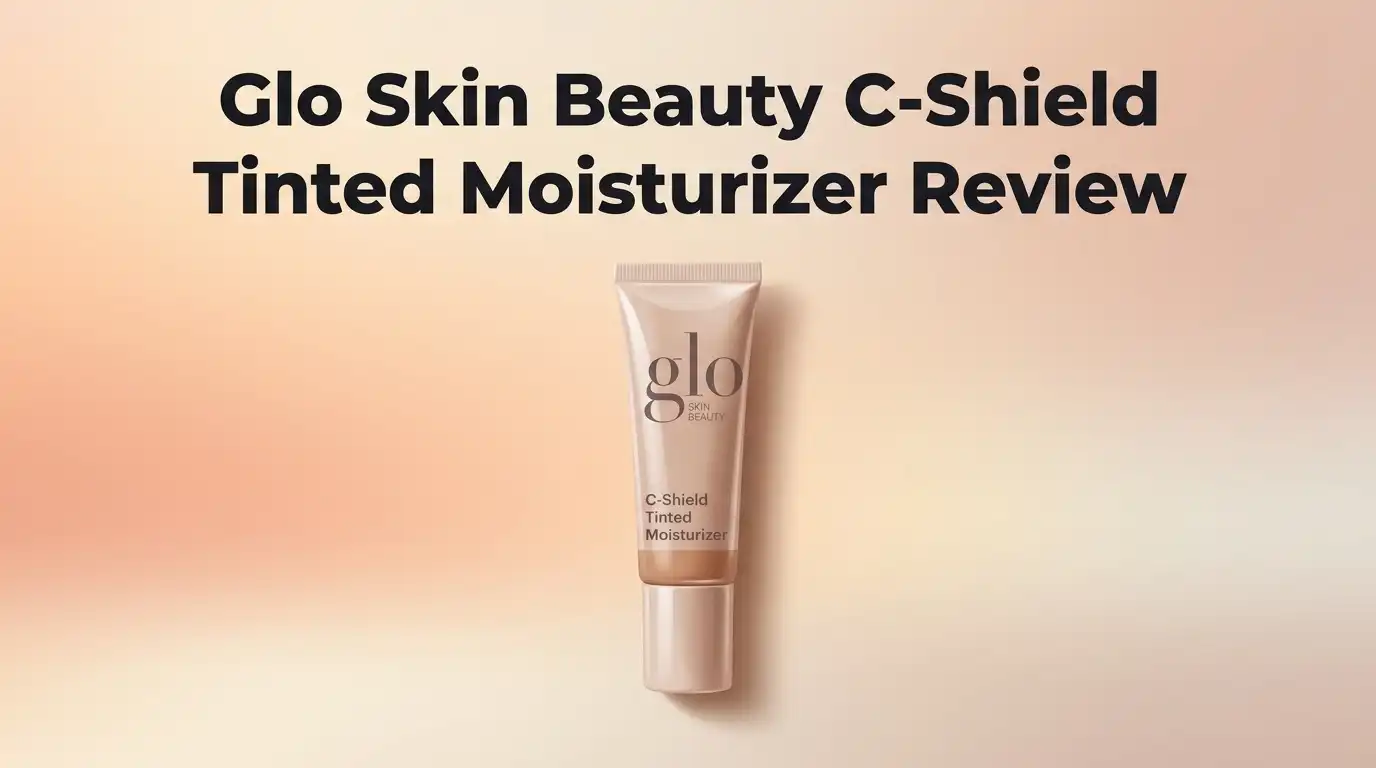
Inside sat a soft squeeze tube with a matte white finish and a flip cap. The cap clicks shut firmly. I tossed the tube in a gym bag for a week and nothing leaked.
The shade name and number print clearly on the front. Small detail, but useful when you own more than one shade for summer and winter.
My first squeeze released more product than I expected. The nozzle is generous. Start with half a pea sized amount or you will waste product on your first try.
The lotion looks pale on the back of your hand. It reads almost gray before you blend it. Do not panic at that stage.
Once you rub it in, the color develops and warms up. The oxidation is minimal, though I noticed a very slight deepening after ten minutes.
The scent is essentially neutral. There is a faint cosmetic smell from the sunscreen filters. It fades within a minute and never bothered me.
The consistency surprised me most. It is thinner than a foundation but thicker than a serum. It feels closer to a lightweight lotion sunscreen with pigment stirred in.
First application verdict: pleasant, fast, and forgiving. My skin looked slightly brighter and noticeably more even within one minute of blending.
Ingredients Breakdown and What They Actually Do
The active filters are avobenzone at 3 percent, octisalate at 5 percent, and zinc oxide at 21.3 percent. That is a high zinc load for a tinted product.
Zinc oxide covers UVB, UVA II, and much of UVA I. It also calms irritated skin, which explains why this tint feels soothing rather than stinging.
Avobenzone handles deep UVA range protection. Octisalate boosts UVB numbers and helps dissolve the other filters into a wearable texture.
Squalane sits second on the inactive list. This is a big deal. Squalane mimics your skin’s own sebum and hydrates without greasiness.
Glycerin follows shortly after. It pulls water into the upper skin layers and keeps the finish looking plump instead of tight.
Argania spinosa kernel oil brings fatty acids and vitamin E. It softens skin and adds a subtle nourishing quality.
Tetrahexyldecyl ascorbate is the vitamin C. Laboratory data suggests it converts to active vitamin C in skin and supports brightness and collagen. Real world results are slower than a dedicated serum.
Bisabolol and chamomile extract both calm inflammation. Sensitive and reactive skin types benefit from that pairing.
Silica adds a soft blur and absorbs a little oil. Dimethicone smooths texture and fills fine lines temporarily.
The formula is alcohol free and fragrance free. Phenoxyethanol and caprylyl glycol handle preservation gently.
One honest caution: chamomile causes allergic reactions in a small number of people. Patch test if you react to daisy family plants.
Shade Range and How to Find Your Match
Glo offers ten shades. They run from 1N Fair through 10W Deep, using N for neutral, W for warm, and C for cool undertones.
The naming system is logical. The number tells you depth. The letter tells you undertone.
Fair skin has decent options with 1N and 2N. Light to medium skin is well covered by 3W, 4C, and 5W.
Medium and tan skin gets 6W and 7W. Deep skin gets 8N, 9N, and 10W.
Here is the honest problem. Ten shades is a thin range in 2026. Competitors offer twenty to thirty shades in the same category.
The gaps between deeper shades are especially wide. Someone between 8N and 9N has no true match and must pick the closer option.
Olive undertones are the other weak spot. There is no dedicated olive shade, so olive skin may read slightly pink or slightly ashy.
The good news is that sheer coverage forgives a lot. A shade that is half a step off still blends into your natural skin.
My advice: if you sit between two shades, size down in depth during winter and up during summer. Your skin changes and this formula sheers out enough to handle it.
Order from a retailer with a friendly return policy. Online shade matching from a swatch image rarely works perfectly.
Top 3 Alternatives for Glo Skin Beauty C-Shield Tinted Moisturizer

Last update on 2026-08-23 / Affiliate links / Images from Amazon Product Advertising API Some of the links on this website are affiliate links, which means that at no additional cost to you, I earn a commission if you click through and make a purchase. I only recommend products and services that I believe will add value to my readers. Thank you for your support!
ILIA Super Serum Skin Tint SPF 40

Last update on 2026-08-23 / Affiliate links / Images from Amazon Product Advertising API Some of the links on this website are affiliate links, which means that at no additional cost to you, I earn a commission if you click through and make a purchase. I only recommend products and services that I believe will add value to my readers. Thank you for your support!
Laura Mercier Tinted Moisturizer Natural Dewy SPF 30


Last update on 2026-08-23 / Affiliate links / Images from Amazon Product Advertising API Some of the links on this website are affiliate links, which means that at no additional cost to you, I earn a commission if you click through and make a purchase. I only recommend products and services that I believe will add value to my readers. Thank you for your support!
Supergoop Glowscreen SPF 40
How It Applies and Wears Through the Day

Last update on 2026-08-23 / Affiliate links / Images from Amazon Product Advertising API Some of the links on this website are affiliate links, which means that at no additional cost to you, I earn a commission if you click through and make a purchase. I only recommend products and services that I believe will add value to my readers. Thank you for your support!
Application is where this product earns most of its praise. The lotion spreads with almost no effort.
Fingers work best. Warmth from your hands thins the product and helps it melt into skin.
A damp sponge also works well. It sheers the coverage further and removes any hint of excess shine.
A brush works but takes more effort. The formula grabs slightly on dry patches when you buff aggressively.
Blending time is about thirty seconds for the full face. It does not set instantly, so you have room to correct mistakes.
The finish appears around two minutes after application. Skin looks dewy, soft, and slightly luminous rather than glittery.
Wear time on normal skin ran about six to seven hours before any noticeable fading. That is respectable for a tinted moisturizer.
On oily skin the story shifts. My nose and forehead showed shine within three hours during humid weather.
A light dusting of translucent powder fixed that and extended wear by several hours. Without powder, the tint breaks up around the nose.
Dry skin performed best in my testing. The squalane kept flaky areas comfortable all day with no cracking.
The formula does not transfer badly. Face masks and phone screens picked up only a small amount of color.
It layers over most serums without pilling. Heavy silicone primers are the exception and caused some rolling.
Sun Protection Performance in Real Use
SPF 30 broad spectrum is solid for daily wear. It is not the highest number on the market, but it handles commutes, errands, and office days.
The zinc percentage is the standout figure here. At 21.3 percent, this is a serious mineral dose disguised inside a cosmetic product.
White cast is minimal in the lighter shades. Deeper shades benefit from the tint itself, which cancels most residual paleness.
That said, deeper skin tones should test in natural light. High zinc formulas can still flash gray in photographs with flash.
The formula is not water resistant. Sweat and swimming will strip it faster than a dedicated sport sunscreen.
Reapplication is the real weakness of every tinted sunscreen. You cannot easily reapply a tint over existing makeup without ruining the finish.
For a beach day, use a proper sunscreen underneath and treat this as makeup only. For a normal working day, it is enough on its own.
You must apply a full layer to reach the labeled SPF. A thin cosmetic layer delivers less protection than the tested amount.
Use about two finger lengths of product across the face and neck to approach real world SPF 30 coverage. Most people apply far less than that.
The blue light claim is harder to verify. Zinc oxide and antioxidants do offer some visible light defense, but the effect is modest.
Who Should Buy This Tinted Moisturizer
Dry and normal skin types get the best experience. The squalane and glycerin base keeps skin comfortable for hours.
Mature skin also does well. The dewy finish reflects light and softens the look of fine lines rather than settling into them.
Sensitive skin is a strong match. No fragrance, no alcohol, high zinc, plus chamomile and bisabolol for calming.
People who hate wearing foundation will appreciate this. The coverage is light enough to feel like nothing on your face.
Anyone who wants fewer steps in the morning benefits. One product replaces moisturizer, sunscreen, and light base makeup.
Skip it if you need medium or full coverage. This tint will disappoint anyone hiding acne scarring or significant pigmentation.
Very oily skin should think carefully. The finish leans dewy, and you will fight shine unless you commit to powder.
Anyone with a strong olive undertone may want to swatch in person first. The shade range does not accommodate olive skin well.
Budget shoppers have better options. Fifty one dollars is steep when drugstore tinted sunscreens perform respectably.
Professional recommendation: if a licensed esthetician already uses Glo products on your skin, this tint fits neatly into that routine.
What This Product Does Not Do Well
Honest reviews name the flaws. Here are the ones I found.
The coverage is genuinely sheer. Marketing photos suggest more evening than you actually get. Expect a healthy skin look, not a corrected complexion.
Some users report difficulty spreading the product. This happens when skin is dry or when you apply over a heavy occlusive layer.
The tube nozzle dispenses too much. Squeeze gently or you will overuse product and burn through the tube fast.
Longevity on oily skin disappoints. Three hours to visible shine is below average for a fifty dollar product.
The shade range remains the biggest failure. Ten shades in 2026 feels behind the market.
There is no water resistance. That limits its usefulness for outdoor activity and workouts.
Reformulation complaints exist online. Some longtime users say a previous version had more radiance and better shade accuracy.
Avobenzone combined with zinc oxide raises a stability question for ingredient nerds. The brand states the formula is tested and stable, but purists prefer all mineral filters.
Price is the final barrier. You pay a premium for the skincare quality, and not everyone will feel the difference.
The value equation depends on how much you value the ingredient list. If you only want tint and SPF, cheaper products deliver that.
Pros and Cons
Pros
- Natural dewy finish that looks like real skin rather than makeup
- High zinc oxide content at 21.3 percent for strong broad spectrum defense
- Squalane and glycerin base delivers genuine oil free hydration all day
- Fragrance free and alcohol free formula suits sensitive and reactive skin
- Stable vitamin C derivative adds slow brightening benefits over time
- Blends fast with fingers, sponge, or brush with minimal effort
- Minimal transfer onto masks, collars, and phone screens
- Comfortable enough to wear daily without feeling heavy or sticky
- Soothing chamomile and bisabolol calm redness and irritation
- Compact tube travels well and the cap seals securely
Cons
- Coverage stays too sheer for acne, scarring, or strong pigmentation
- Only ten shades with wide gaps in the deeper and olive ranges
- Shine appears within three hours on oily skin without powder
- No water resistance, so sweat and swimming reduce protection
- Premium price near fifty one dollars for a small tube
- Nozzle dispenses more product than needed
- Some users report the formula spreads poorly on dry skin
- Reapplying sunscreen over it during the day is awkward
- Not sold in most physical drugstores, so shade matching is hard
Price and Value in 2026
The retail price sits near fifty one dollars. Subscription pricing on some retailers drops it closer to forty six dollars.
Per ounce, that works out to roughly thirty dollars. That is firmly in the premium bracket.
A single tube lasts most people around two to three months with daily use. Heavier hands will finish it faster.
Compare that to a drugstore tinted mineral sunscreen at fifteen dollars. The gap is significant.
So what does the extra money buy? Better texture, a cleaner ingredient list, and a finish that looks less like sunscreen.
The vitamin C, argan oil, and squalane are real skincare additions. They are not just marketing filler.
Still, the sheer coverage limits how much foundation cost you actually replace. You may still buy concealer separately.
Value depends on your skin type. Dry and sensitive skin gets the most benefit per dollar.
Oily skin gets the least value because the finish works against you and requires additional powder.
Watch for holiday promotions and esthetician discounts. Professional skincare brands run sales more often than people assume.
How to Apply It for the Best Results
Start with clean, hydrated skin. Apply your serum and let it absorb fully for two minutes.
Skip heavy silicone primers. They cause pilling with this formula.
Dispense a small amount, roughly the size of half a pea, onto your fingertips.
Warm the product between your fingers first. This thins the texture and improves spread.
Dot it across your forehead, cheeks, nose, and chin. Blend outward with light circular motions.
Work from the center of the face toward the hairline and jaw. That keeps coverage strongest where you need it.
Add a second thin layer if you want more evening or more sun protection. Wait one minute between layers.
Use a damp sponge to press the edges into skin. This removes any visible line at the jaw.
Add concealer only where necessary. Applying it after the tint saves product.
Set the T zone with translucent powder if you have oily skin. Leave the cheeks bare to keep the glow.
Do not forget your neck and ears. Sun damage shows there first.
Wash it off properly at night. High zinc formulas need an oil cleanser or balm followed by a gentle face wash.
C-Shield Versus ILIA and Laura Mercier
These three products compete directly. Each one wins in a different area.
ILIA Super Serum Skin Tint offers SPF 40 and thirty shades. Shade matching is far easier with ILIA.
The ILIA formula is all mineral with zinc oxide only. It feels slightly thicker and can flash white on deeper tones.
Coverage is comparable. Both stay sheer and dewy.
Laura Mercier Tinted Moisturizer delivers the longest wear of the three. The newer version claims sixteen hour wear and twenty four hour hydration.
Laura Mercier gives slightly more coverage than Glo. The finish is dewy but more controlled.
The Laura Mercier shade range is broader than Glo but narrower than ILIA.
Supergoop Glowscreen is a different animal. It is a sunscreen primer with a subtle universal tint rather than a true shade matched base.
Glowscreen works for people who want glow and protection without color matching stress.
Where does Glo win? Skin comfort and the ingredient list. The squalane base feels better on dry and sensitive skin than either competitor.
Glo also produces the most natural looking dew. It reads as healthy skin rather than product.
If shade matching matters most, choose ILIA. If wear time matters most, choose Laura Mercier. If skin feel matters most, choose Glo.
Final Verdict
The Glo Skin Beauty C-Shield Tinted Moisturizer is a good product with a specific audience.
It rewards dry, normal, mature, and sensitive skin. Those users get hydration, comfort, real sun protection, and a natural glow.
It frustrates oily skin and anyone needing coverage. Those users should look elsewhere.
The formula quality is high. The zinc percentage, squalane base, and antioxidant blend all deliver on their claims.
The shade range holds it back. Ten options is simply not competitive today.
The price is defensible but not generous. You pay for skincare grade formulation inside a makeup product.
My rating: 4 out of 5 for the right skin type, 3 out of 5 overall.
Would I buy it again? Yes, for winter. My skin loved it in dry conditions.
In summer humidity, I reached for a matte alternative instead.
Buy it if you want your skin to look like better skin. Skip it if you want makeup that hides things.
Frequently Asked Questions
Is Glo Skin Beauty C-Shield a sunscreen or a makeup product?
It is both. The product carries an SPF 30 broad spectrum rating with zinc oxide, avobenzone, and octisalate as active filters. It also contains iron oxide pigments that tint the skin. You can wear it as your only sun protection during a normal indoor day, as long as you apply enough product.
Does the C-Shield Tinted Moisturizer cause breakouts?
The formula is oil free and rates low on comedogenicity scales. Squalane, glycerin, and zinc oxide are all friendly to acne prone skin. That said, dimethicone and argan oil bother some people. Patch test on your jawline for three days before full face use if you break out easily.
How many shades does it come in?
Ten shades, running from 1N Fair to 10W Deep. The letters indicate undertone, with N for neutral, W for warm, and C for cool. The range covers most skin depths but leaves noticeable gaps, especially in olive and deeper tones.
Can I wear it over other sunscreen?
Yes. Applying a separate sunscreen first and then layering the tint on top gives stronger protection. Let the base sunscreen dry completely for two to three minutes to avoid pilling. This approach works well for outdoor days.
How long does one tube last?
Most people finish a tube in two to three months with daily use. Applying a generous sunscreen level layer shortens that to about six weeks. Using a small cosmetic amount stretches it to four months.
Is it good for oily skin?
It works, but with conditions. The dewy finish reads as shine on oily skin within a few hours. Set your T zone with translucent powder and expect one touch up during the day. Oily skin types may prefer a matte tinted sunscreen instead.
Does it leave a white cast?
Very little in lighter and medium shades. The tint neutralizes most of the zinc oxide paleness. Deeper skin tones should check the result in natural daylight and in flash photography, since high zinc formulas can still flash slightly.
Is it worth the price in 2026?
For dry, sensitive, or mature skin, yes. The ingredient quality and skin comfort justify the cost. For oily skin or anyone needing real coverage, cheaper alternatives deliver similar or better results.

Hi i’m Mia Jenkins a fashion trend expert with a passion for self-expression, skincare, haircare and makeup. With a keen eye for style and a deep understanding of the latest trends and beauty products.