
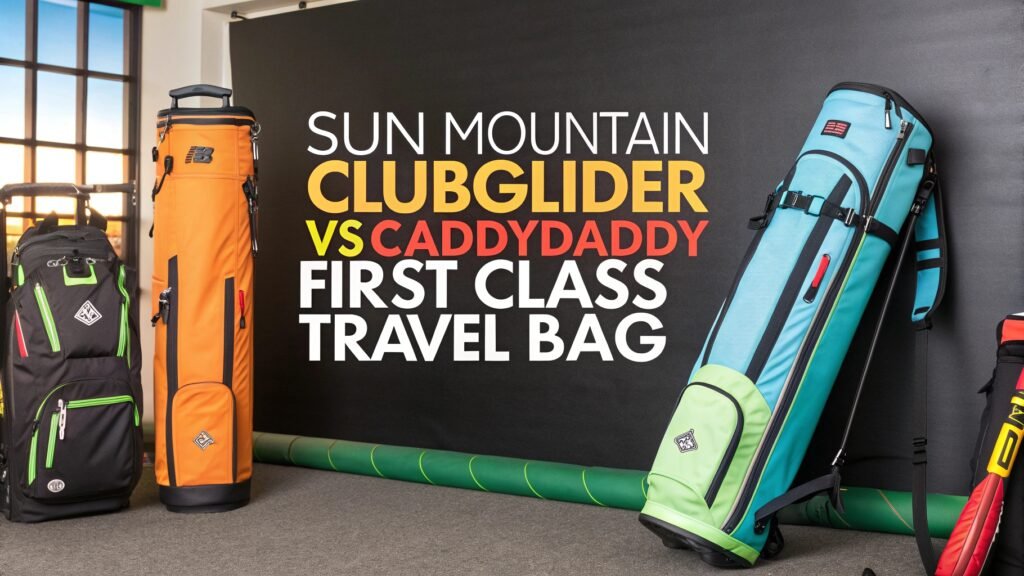
Sun Mountain ClubGlider vs CaddyDaddy First Class Travel Bag
Choosing the right golf travel bag can make the difference between arriving at your destination with damaged clubs or peace of mind.
Two standout options dominate the market today: the Sun Mountain ClubGlider and the CaddyDaddy First Class Travel Bag. Both offer unique features that cater to different golfer needs and budgets.
Airport baggage handlers don’t care about your expensive clubs. That’s why investing in a quality golf travel bag isn’t just smart – it’s essential for protecting your investment.
Key Takeaways
- The Sun Mountain ClubGlider excels in ease of use with its unique glider system that allows you to load and unload clubs without kneeling on the ground. This patented leg mechanism sets it apart from traditional travel bags and makes airport handling significantly easier.
- CaddyDaddy First Class offers superior value at $199.95 compared to the ClubGlider’s $339.99 price tag. Despite the lower cost, it includes military-grade 1000D ballistic nylon construction and comprehensive two-year warranty coverage.
- Weight differences matter for frequent travelers. The ClubGlider weighs 11.3 pounds while the First Class tips the scales at approximately 12 pounds. This small difference can add up over multiple trips, especially when airlines charge for overweight bags.
- Both bags provide excellent club protection but use different approaches. The ClubGlider focuses on dense foam padding and structural integrity, while the First Class employs double-layer foam/EVA padding with crush-resistant top protection.
- Warranty coverage varies significantly between these options. CaddyDaddy provides a two-year full replacement warranty that covers airline damage, while Sun Mountain offers a standard one-year limited warranty.
- Internal dimensions determine compatibility with your current golf bag setup. The ClubGlider measures 52″ x 14″ x 14″ internally, while specific First Class dimensions vary by model but generally accommodate standard golf bags comfortably.
Sun Mountain ClubGlider

The Sun Mountain ClubGlider represents the premium tier of golf travel bags with innovative features that justify its higher price point. This bag revolutionizes the travel experience through its patented leg mechanism that extends and retracts in one easy motion.
Construction quality sets the ClubGlider apart from budget alternatives. The ballistic-style nylon exterior withstands rough baggage handling while maintaining its appearance after years of use. Heavy-duty two-way zippers run the full length of the bag, providing easy access to your clubs while ensuring secure closure during transport.
The internal cinch straps secure your golf bag firmly in place, preventing movement that could cause club damage. Dense foam padding protects club heads from impact while the structured design maintains its shape even under pressure. The ClubGlider’s engineering focuses on long-term durability rather than short-term cost savings.
Pivoting caster wheels make airport navigation effortless. These wheels rotate 360 degrees, allowing you to maneuver through crowded terminals without strain. The wheel system integrates with the leg mechanism, creating a stable platform when extended and compact storage when retracted.
Weight distribution is carefully engineered to prevent tipping when loaded with clubs. The balanced design reduces physical strain during transport, making it ideal for golfers who travel frequently or have mobility concerns. Multiple grab handles positioned strategically around the bag provide lifting options regardless of your position.
CaddyDaddy First Class Travel Bag

The CaddyDaddy First Class delivers military-grade protection without premium pricing. Built with 1000D ballistic nylon construction, this bag withstands the harshest treatment airline baggage systems can deliver. The material choice reflects CaddyDaddy’s commitment to durability over flashy marketing.
Two layers of foam/EVA padding provide maximum club protection. This dual-layer system absorbs impact energy before it reaches your clubs, effectively creating a buffer zone around your equipment. The padding density is calibrated to handle drops, throws, and crushing forces commonly encountered during air travel.
Internal and external compression straps work together to eliminate movement within the bag. These straps adjust to accommodate different golf bag sizes while maintaining secure positioning throughout the journey. The compression system also helps the bag maintain its shape when empty, extending its useful life.
Top-of-the-line YKK zippers ensure reliable operation after hundreds of uses. These zippers resist jamming and maintain smooth operation even when the bag is fully loaded. The zipper placement allows for easy loading and unloading while providing complete access to your equipment.
The self-standing base eliminates the need to lean the bag against walls or other surfaces. This feature proves particularly valuable in airports where floor space is limited and surfaces may be dirty or wet. XL wheels handle various terrain types encountered during travel, from smooth airport floors to parking lot asphalt.
Top 3 Alternatives for Golf Travel Bags


Design and Construction Differences
The fundamental design philosophies between these bags reveal different approaches to golf travel protection. Sun Mountain prioritizes innovation and user experience, while CaddyDaddy focuses on proven protection methods and value engineering.
Material selection showcases each brand’s priorities. The ClubGlider uses ballistic-style nylon that balances weight, durability, and appearance. CaddyDaddy employs heavier-duty 1000D ballistic nylon that prioritizes protection over weight considerations.
Stitching patterns and reinforcement locations differ significantly between models. The ClubGlider features strategic reinforcement at stress points like handle attachment points and zipper corners. CaddyDaddy uses more extensive reinforcement throughout the bag structure, adding weight but increasing long-term durability.
Padding distribution follows different strategies. Sun Mountain concentrates dense foam padding in critical areas where clubs are most vulnerable to impact. CaddyDaddy applies comprehensive padding across the entire interior surface, creating uniform protection regardless of club positioning.
Color options and aesthetic details reflect each brand’s target market. The ClubGlider offers premium color combinations that appeal to golfers who view their travel bag as a style statement. CaddyDaddy focuses on practical color choices that hide wear and maintain professional appearance over time.
Hardware quality varies between premium and value-oriented approaches. Sun Mountain uses custom-designed hardware that integrates seamlessly with the bag’s overall design. CaddyDaddy employs proven hardware solutions that prioritize reliability and replacement availability.
Ease of Use and Mobility
Loading and unloading procedures highlight the most significant operational difference between these bags. The ClubGlider’s leg mechanism allows you to work at a comfortable height, reducing back strain and improving efficiency. Traditional bags like the First Class require ground-level loading that can be challenging in tight spaces.
Wheel performance varies significantly between different travel scenarios. The ClubGlider’s pivoting casters excel on smooth surfaces but may struggle with uneven terrain. CaddyDaddy’s larger wheels handle rough surfaces better but sacrifice maneuverability in confined spaces.
Handle placement and ergonomics affect daily usability more than most golfers realize. Multiple handle positions on both bags provide options for different lifting scenarios, but the handle padding and grip design influence comfort during extended use.
Weight distribution when loaded impacts how the bag behaves during transport. The ClubGlider’s engineering keeps the center of gravity low, preventing tipping during movement. The First Class achieves stability through wider base design and strategic weight placement.
Storage when not in use represents an often-overlooked consideration. Both bags require significant storage space, but the ClubGlider’s leg mechanism may complicate storage in tight spaces. The First Class folds more compactly for off-season storage.
Setup time and complexity differ between models. The ClubGlider’s one-motion leg deployment speeds setup but requires understanding the mechanism. The First Class setup involves traditional zipper opening and strap adjustment but follows familiar patterns most golfers know.
Protection and Durability Features
Impact resistance testing reveals how each bag handles real-world abuse. The ClubGlider’s structural design distributes impact forces across the frame, preventing concentrated stress that could damage clubs. The First Class relies on padding thickness to absorb and dissipate impact energy.
Crush resistance becomes critical when bags are stacked in cargo holds. The ClubGlider’s rigid construction maintains its shape under pressure, protecting clubs from compression damage. CaddyDaddy’s reinforced top section specifically addresses this vulnerability with additional padding and structural support.
Weather resistance affects equipment protection during ground transport and outdoor storage. Both bags include water-resistant materials, but seam sealing and zipper design determine actual weather protection levels. The ClubGlider’s zipper placement may offer better weather resistance than the First Class design.
Abrasion resistance determines how well the bag’s exterior maintains its appearance after repeated use. The ClubGlider’s ballistic-style nylon resists scuffing but may show wear patterns over time. CaddyDaddy’s heavier-duty material maintains appearance better but adds weight.
Internal protection systems prevent clubs from contacting each other during transport. Divider systems and padding placement in both bags address this concern differently. The ClubGlider uses strategic padding placement, while the First Class employs comprehensive interior coverage.
Long-term durability depends on component quality and design margins. The ClubGlider’s premium components may last longer under normal use, while the First Class design provides more protection against extreme abuse. Replacement part availability varies between manufacturers.
Pricing and Value Analysis
Initial purchase price represents only part of the total ownership cost. The ClubGlider’s $339.99 price point reflects premium materials and innovative design features. The First Class at $199.95 offers substantial savings while maintaining essential protective functions.
Cost per use calculations favor different bags depending on travel frequency. Frequent travelers may justify the ClubGlider’s premium through enhanced durability and convenience features. Occasional travelers might find better value in the First Class approach.
Warranty coverage differences significantly impact long-term value. CaddyDaddy’s two-year full replacement warranty, including airline damage coverage, provides exceptional protection for your investment. Sun Mountain’s one-year limited warranty follows industry standards but offers less comprehensive coverage.
Replacement part availability affects long-term ownership costs. Sun Mountain’s established dealer network may provide better access to replacement components. CaddyDaddy’s newer market presence might limit replacement options in some regions.
Resale value considerations become important for golfers who upgrade regularly. Premium brands like Sun Mountain typically maintain higher resale values. Value-oriented options like CaddyDaddy may depreciate more quickly but cost less initially.
Feature-to-price ratios reveal different value propositions. The ClubGlider charges premium prices for convenience and innovation features. The First Class delivers core protective functions at competitive pricing without premium features.
Size and Weight Specifications
Internal dimensions determine compatibility with your existing golf equipment. The ClubGlider’s 52″ x 14″ x 14″ interior accommodates most standard golf bags comfortably. The First Class offers similar dimensions with slight variations depending on the specific model selected.
External dimensions affect airline baggage policies and handling requirements. Both bags fall within standard airline size limits, but dimensional differences might impact specific airline policies. Weight allowances become critical when bags approach airline limits.
Empty weight affects your ability to pack additional items while staying within airline weight restrictions. The ClubGlider’s 11.3-pound empty weight leaves more room for clubs and accessories. The First Class weighs approximately 12 pounds empty, slightly reducing available payload.
Weight distribution when packed influences handling characteristics. The ClubGlider’s engineering maintains balance even when loaded unevenly. The First Class achieves stability through base design and strategic component placement.
Storage requirements when not in use vary between models. The ClubGlider’s leg mechanism may require additional storage space. The First Class folds more compactly for off-season storage in garages or closets.
Packed dimensions with clubs affect shipping costs and storage during travel. Both bags expand significantly when loaded with golf equipment, but overall dimensions remain within airline guidelines for most carriers.
Wheels and Maneuverability
Wheel design philosophy reflects each manufacturer’s approach to travel bag mobility. The ClubGlider employs pivoting caster wheels that excel in confined spaces like airport terminals. These wheels rotate 360 degrees, allowing precise maneuvering around obstacles and through narrow spaces.
CaddyDaddy’s XL wheel system prioritizes durability and performance across various surface types. These larger wheels roll more easily over rough surfaces like parking lot asphalt or airport curbs. The wheel size and bearing quality affect long-term performance and replacement costs.
Rolling resistance varies significantly between wheel designs and surface types. The ClubGlider’s smaller wheels may require more effort on rough surfaces but provide better control on smooth floors. The First Class wheels handle uneven terrain better but sacrifice some precision in tight spaces.
Wheel positioning affects bag stability during transport and storage. Both bags place wheels strategically to prevent tipping when loaded with clubs. The wheel base width influences stability but also affects maneuverability in narrow spaces like airplane aisles.
Replacement wheel availability becomes important for frequent travelers who wear out components. Manufacturers vary in their support for replacement parts, and wheel standardization affects your ability to find compatible replacements locally.
Rolling noise levels matter in quiet environments like hotel lobbies or early morning departures. Wheel bearing quality and design influence noise generation during transport. Premium wheels typically operate more quietly than budget alternatives.
Airport and Airline Considerations
Airline baggage policies affect golf travel bag selection more than most golfers realize. Both bags comply with standard airline size restrictions, but specific carrier policies regarding golf equipment vary significantly. Weight limits often prove more restrictive than size requirements.
Baggage handler treatment represents the primary threat to your golf equipment during air travel. Both bags design their protection systems around realistic baggage handling scenarios. The ClubGlider’s structural approach distributes impact forces, while the First Class relies on padding absorption.
Check-in procedures differ between airlines and may favor certain bag designs. Some carriers have specific requirements for golf equipment packaging. Both manufacturers design their bags to meet general airline requirements, but individual carrier policies may vary.
Damage claim processes become important when protection systems fail. CaddyDaddy’s comprehensive warranty coverage simplifies damage claims by covering airline handling damage. Sun Mountain’s limited warranty may require separate airline claims for transport damage.
International travel considerations include customs requirements and international airline policies. Both bags meet general international standards, but specific country requirements may affect bag selection for international golf trips.
Airport navigation challenges include crowded terminals, escalators, and uneven surfaces. The ClubGlider’s maneuverability advantages become apparent in these environments. The First Class wheels handle surface irregularities better but may be less precise in crowded areas.
User Reviews and Customer Feedback
Professional golfer testimonials provide insights into real-world performance under demanding conditions. Tour professionals who travel frequently often prefer the ClubGlider’s convenience features. Club professionals who handle multiple sets of clubs may favor the First Class durability approach.
Amateur golfer experiences vary based on travel frequency and expectations. Weekend golfers often find the First Class provides adequate protection at an attractive price point. Frequent travelers may appreciate the ClubGlider’s convenience features enough to justify the premium pricing.
Common complaint patterns reveal design weaknesses in both bags. ClubGlider users occasionally report leg mechanism issues after extended use. First Class users sometimes mention zipper stress under heavy loads, though this appears less common with proper loading techniques.
Durability reports from long-term users provide valuable insights into component longevity. Both bags generally receive positive durability ratings, but failure modes differ between designs. The ClubGlider’s mechanical components may require more maintenance than the First Class simpler design.
Customer service experiences vary between manufacturers and affect overall ownership satisfaction. Sun Mountain’s established dealer network may provide better local support. CaddyDaddy’s direct-to-consumer approach offers different advantages but may limit local service options.
Warranty claim experiences reveal how manufacturers handle product failures. CaddyDaddy’s comprehensive warranty coverage generally receives positive feedback from users who have filed claims. Sun Mountain’s warranty process follows industry standards but may require more documentation.
Maintenance and Care Requirements
Cleaning procedures differ between bag materials and construction types. The ClubGlider’s ballistic-style nylon cleans easily with standard fabric cleaners. CaddyDaddy’s heavier-duty material may require more aggressive cleaning products for stubborn stains.
Zipper maintenance prevents premature failure and ensures smooth operation. Both bags use quality zippers, but lubrication requirements and cleaning procedures vary. Regular zipper maintenance extends component life significantly regardless of bag choice.
Wheel bearing service becomes necessary for frequent travelers who accumulate significant mileage. The ClubGlider’s pivoting wheels may require different maintenance than the First Class fixed wheels. Bearing replacement availability varies between manufacturers.
Storage requirements when not in use affect bag longevity. Both bags benefit from dry storage away from extreme temperatures. The ClubGlider’s leg mechanism may require periodic lubrication to maintain smooth operation.
Inspection schedules help identify wear patterns before they become failures. Both bags benefit from regular inspection of stress points like handle attachments and zipper corners. Early detection of wear patterns allows for preventive maintenance.
Component replacement extends bag useful life beyond initial purchase. Manufacturers vary in their support for replacement parts, and some components may be user-serviceable. Documentation of replacement procedures affects your ability to maintain the bag independently.
Warranty and Customer Support
Warranty coverage scope represents a significant differentiator between these travel bag options. CaddyDaddy’s two-year full replacement warranty covers manufacturing defects and airline damage, providing comprehensive protection for your investment. This coverage even includes damage caused by airline baggage handling, which most manufacturers exclude.
Sun Mountain’s one-year limited warranty follows industry standards but provides less comprehensive coverage. The warranty covers manufacturing defects but excludes damage from normal wear or airline handling. Warranty claim procedures require documentation and may involve local dealer coordination.
Customer service accessibility varies between manufacturers’ business models. Sun Mountain operates through an established dealer network that provides local support but may involve intermediaries for warranty claims. CaddyDaddy’s direct-to-consumer approach provides direct manufacturer contact but may limit local service options.
Response time expectations for warranty claims and customer service inquiries differ between companies. Established manufacturers like Sun Mountain typically have systematic processes for handling customer issues. Newer companies like CaddyDaddy may provide more personalized service but with potentially variable response times.
Replacement part availability affects long-term ownership costs and convenience. Sun Mountain’s established dealer network may provide better access to replacement components like wheels, zippers, and handles. CaddyDaddy’s parts availability may be more limited due to their newer market presence.
International warranty coverage becomes important for golfers who travel abroad. Both manufacturers offer limited international support, but coverage specifics vary by region. Documentation requirements for international warranty claims may differ from domestic procedures.
Making Your Decision
Travel frequency represents the most important factor in choosing between these golf travel bags. Golfers who fly more than six times per year may find the ClubGlider’s convenience features justify the premium pricing. Occasional travelers might find better value in the First Class protection approach.
Budget considerations extend beyond initial purchase price to include warranty coverage and long-term durability. The First Class offers better immediate value with its comprehensive warranty coverage. The ClubGlider’s premium construction may provide better long-term value through extended useful life.
Physical requirements such as mobility limitations or strength concerns may favor the ClubGlider’s ease-of-use features. The elevated loading height and smooth mobility reduce physical strain during travel. Traditional bags like the First Class require ground-level loading that may be challenging for some golfers.
Protection priorities determine whether you need maximum impact resistance or convenient handling. Both bags provide adequate protection for normal travel conditions. Extreme protection needs might favor the First Class dual-layer padding approach over the ClubGlider’s structural design.
Storage constraints at home or during travel may influence bag selection. The ClubGlider’s leg mechanism requires additional storage space but provides operational advantages. The First Class folds more compactly for off-season storage in limited space situations.
Future needs consideration helps avoid premature replacement requirements. Golfers planning to increase travel frequency might benefit from investing in ClubGlider convenience features immediately. Current occasional travelers might start with the First Class and upgrade later if travel patterns change.
Frequently Asked Questions
Which bag provides better protection for expensive clubs?
Both bags provide excellent protection, but they use different approaches. The CaddyDaddy First Class employs dual-layer foam/EVA padding throughout the interior, creating comprehensive impact absorption. The Sun Mountain ClubGlider uses strategic dense foam placement combined with structural engineering to distribute impact forces. For maximum protection, the First Class dual-layer system may provide slightly better impact resistance, especially for extremely valuable club sets.
How much weight difference affects airline baggage fees?
The weight difference between these bags is approximately 0.7 pounds (ClubGlider at 11.3 lbs vs First Class at 12 lbs). While this difference seems minimal, it can matter when your packed bag approaches airline weight limits. Most airlines charge significant fees for bags exceeding 50-pound limits, so every pound of bag weight reduces your available allowance for clubs and accessories.
Can both bags accommodate oversized golf bags?
The ClubGlider’s internal dimensions of 52″ x 14″ x 14″ accommodate most standard golf bags comfortably. The First Class offers similar internal space with slight model variations. Both bags handle cart bags and stand bags effectively, but extremely oversized tour bags might require measurement verification before purchase.
Which manufacturer provides better customer service?
Sun Mountain operates through an established dealer network providing local support and service options. CaddyDaddy uses a direct-to-consumer model offering direct manufacturer contact. Customer service quality depends more on individual needs than company structure – some prefer local dealer support while others value direct manufacturer communication.
Do these bags meet international airline requirements?
Both bags comply with general international airline requirements for golf equipment transport. However, specific airline policies vary significantly between carriers and countries. Always verify current baggage policies with your specific airline before traveling, as requirements change periodically and vary by destination.
How long do these travel bags typically last?
With proper care and moderate use, both bags should provide 5-10 years of reliable service. The ClubGlider’s premium construction may extend useful life under normal conditions, while the First Class design provides better protection against extreme abuse. Component replacement availability affects long-term durability for both options.
Which bag works better for rental car storage?
The ClubGlider’s leg mechanism and pivoting wheels provide advantages in confined spaces like rental car trunks. However, the First Class wheels handle uneven surfaces like parking lots better than the ClubGlider’s smaller casters. Both bags fit in most rental car trunk spaces when properly positioned.

Hi i’m Mia Jenkins a fashion trend expert with a passion for self-expression and creativity. With a keen eye for style and a deep understanding of the latest trends.