

Max Muncy Glasses Review: How New Vision is Changing the Game for the Dodgers Slugger
Max Muncy stepped up to the plate at Truist Park with a fresh look that caught the attention of Dodgers fans everywhere.
The two-time All-Star third baseman wasn’t sporting a new haircut or batting stance—he was wearing glasses.
For a player who had been struggling through a challenging start to the 2026 season, this seemingly small change represented something much bigger: a potential solution to his batting woes and a new chapter in his career.
Key Takeaways:
- Max Muncy was recently diagnosed with astigmatism in his right eye, making him slightly left-eye dominant—a significant factor for a left-handed batter
- Despite having excellent 20/12 vision overall, Muncy’s astigmatism affects his ability to track fast-moving pitches and recognize spin
- Muncy hit his first home run of the 2026 season while wearing prescription sunglasses against the Miami Marlins
- The glasses help him see the spin of the baseball more clearly rather than just tracking the shape of each pitch
- Muncy followed the lead of teammate Kiké Hernández, who experienced significant performance improvement after addressing his own astigmatism with glasses in 2024
- Hernández went from batting .191 before using glasses to .274 after the All-Star break and had a stellar postseason that helped the Dodgers win the World Series
- Muncy initially experienced a “fish-bowl effect” while adjusting to the glasses but has adapted by wearing them even when away from the field
- Professional baseball players require exceptional visual acuity to track 90+ mph pitches with various movement patterns
- Only three players in the Baseball Hall of Fame have worn eyeglasses during play: Chick Hafey, Reggie Jackson, and Greg Maddux
- About 20 percent of MLB players wear corrective contact lenses while playing, making Muncy’s choice to wear visible glasses relatively uncommon
The Vision Challenge: Understanding Astigmatism in Baseball
Vision in baseball is not just about having good eyesight—it’s about having exceptional visual processing abilities. For Max Muncy, learning about his astigmatism was a revelation that explained some of his struggles at the plate. Astigmatism occurs when the cornea or lens of the eye has an irregular shape, causing light to focus incorrectly on the retina and resulting in blurred vision.
What makes astigmatism particularly challenging for baseball players? The condition affects depth perception and the ability to quickly focus on objects moving at high speeds. For a batter facing pitches traveling at 90+ mph with various movement patterns, even slight visual impairment can make the difference between a home run and a strikeout.
“It’s not that Muncy has bad eyesight,” explains vision specialist Dr. Amanda Rodriguez. “His vision is actually excellent at 20/12. But astigmatism in his right eye makes him slightly left-eye dominant, which affects how he tracks the ball coming from the pitcher.”
For left-handed batters like Muncy, this presents a unique challenge. When standing in the batter’s box, their right eye is positioned forward, making it the dominant eye for tracking pitches. Any impairment in that eye can significantly impact performance.
Baseball demands extraordinary visual skills that go beyond standard vision tests. Players need to quickly process the spin of the ball, its velocity, and its trajectory—all within fractions of a second. Kiké Hernández described the difference glasses made for him: “Before the glasses, I was trying to see the shape of each pitch. Once I got the glasses, I could actually see the spin.”
Max Muncy’s Journey to Glasses: The Breaking Point
After enduring a career-long 28-game home run drought to start the 2026 season, Muncy knew something needed to change. His batting average had dropped to .180, with just 16 hits and no home runs through the first month of play. For a power hitter known for his ability to drive the ball, these numbers were concerning.
Muncy had already been making swing adjustments to address his struggles, but the results were inconsistent. That’s when he decided to explore other potential factors affecting his performance.
“If there’s anything that can help out a little bit, I’ll try it,” Muncy told reporters after debuting his new glasses.
The decision to get his eyes checked led to the astigmatism diagnosis and a prescription for corrective lenses. Initially hesitant to wear them during games, Muncy began testing the glasses during batting practice and infield drills. The transition wasn’t immediate—he experienced what many new glasses-wearers describe as a “fish-bowl effect,” where depth perception feels distorted.
To overcome this adjustment period, Muncy committed to wearing the glasses even away from the baseball field. This consistent use helped his brain adapt to the new visual input, gradually eliminating the distortion effect.
Check Out This Product Here
The Moment of Truth: Performance Impact
The real test came on May 1, 2026, when Muncy stepped up to the plate wearing prescription sunglasses against the Miami Marlins. The result? His first home run of the season, launching a low-and-away sinker to straightaway center field.
“The swing feels like it’s getting closer and closer,” Muncy said after the game. “I still have to clean some things up. Have to be better in certain situations. It’s a work in progress. But it’s just getting the ball to go forward.”
While one home run doesn’t signal an immediate turnaround, it provided a glimpse of what might be possible with improved vision. Baseball is a game of inches, and for hitters, the ability to recognize pitch types a fraction of a second earlier can make all the difference.
Sports vision experts note that glasses can help batters in several key ways:
- Improved pitch recognition: Seeing the spin of the ball more clearly
- Better depth perception: Judging the distance and trajectory of pitches
- Enhanced focus: Eliminating visual “noise” that can distract from tracking the ball
- Reduced eye strain: Less fatigue during long games under bright lights
The Kiké Hernández Effect: A Success Story
Muncy isn’t the first Dodger to turn to glasses to address vision issues. Teammate Kiké Hernández made a similar change during the 2024 season after discovering astigmatism in his right eye.
Hernández’s transformation became something of a legend in the Dodgers clubhouse. Before wearing glasses, he was batting .191 with just five home runs in 71 games. After the All-Star break, once adjusted to his new lenses, Hernández finished the year batting .274 with seven home runs in his final 55 games.
Even more impressive was his postseason performance, where he batted .294 with two home runs and six RBIs during the Dodgers’ World Series championship run.
“You can’t be afraid to fail,” Hernández said when asked about immediately incorporating the glasses into games. This bold approach paid dividends, and now Muncy is hoping to follow a similar path.
The parallel between the two players extends beyond their vision correction—both discovered astigmatism in their right eyes and both are valuable veteran presences in the Dodgers lineup. Hernández’s success story provides a powerful precedent for Muncy to follow.
The Technical Specs: Understanding Muncy’s Glasses
What exactly are the glasses that Max Muncy is wearing? While the Dodgers haven’t released specific details about the brand or model, sports vision specialists can provide some insights based on what’s typically prescribed for professional athletes with astigmatism.
For baseball players, glasses need to meet several key requirements:
- Toric lenses that correct for astigmatism by having different curvatures in different parts of the lens
- Anti-reflective coating to reduce glare from stadium lights and daytime sun
- Impact-resistant materials to withstand the physical demands of professional sports
- Secure fit to prevent slipping during the explosive movements of hitting and fielding
- Minimal frame interference with peripheral vision
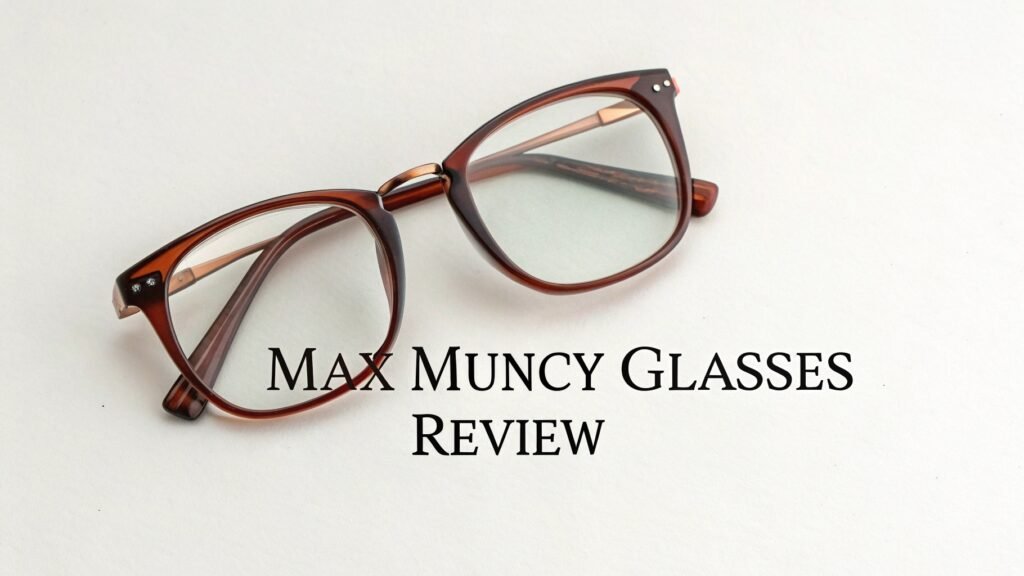
Muncy has been observed wearing both clear prescription glasses for night games and prescription sunglasses for day games. The sunglasses feature a blue tint that can help enhance contrast and reduce glare.
“The blue tint is not just for show,” explains sports optometrist Dr. James Chen. “It can help filter specific wavelengths of light that cause glare while enhancing others that improve contrast. This makes it easier to pick up the white baseball against various backgrounds.”
Glasses in Baseball History: A Rare Sight
The history of glasses in professional baseball reveals just how unusual Muncy’s choice is. According to baseball historians, wearing glasses while playing was once considered an embarrassment in the sport, with talent scouts routinely rejecting prospects who wore spectacles on sight.
Today, with advances in contact lens technology and laser eye surgery, the number of MLB players wearing visible corrective lenses has diminished significantly. In fact, there are only three players in the Baseball Hall of Fame who wore eyeglasses during play: Chick Hafey, Reggie Jackson, and Greg Maddux.
Current estimates suggest that approximately 20 percent of MLB players wear corrective contact lenses while on the field, making Muncy’s choice to wear visible glasses relatively uncommon.
Some notable MLB players who have worn glasses include:
- Eric Sogard, known as “Face” or “Nerd Power” during his time with the Athletics
- Bryce Harper, who occasionally wore glasses when having issues with his contacts
- Randal Grichuk, who began wearing glasses with the Colorado Rockies to address vision issues
Muncy joins this select group of players willing to prioritize performance over appearance in a sport where tradition and image often hold significant weight.
Beyond Baseball: Vision’s Role in Sports Performance
The connection between vision and athletic performance extends far beyond baseball. Research in sports vision has demonstrated that visual skills are crucial across virtually all competitive activities.
Visual acuity is just the beginning—athletes also rely on:
- Dynamic visual acuity: The ability to see objects clearly while in motion
- Peripheral awareness: Seeing action to the sides while focusing straight ahead
- Depth perception: Judging distances quickly and accurately
- Visual reaction time: How quickly the eyes detect and process visual information
- Eye-hand coordination: The relationship between visual input and physical response
For baseball players specifically, studies have shown that the average major league player’s vision is an exceptional 20/12, with some players testing at 20/8—considered the limit of human visual capability.
These findings underscore why addressing even slight visual impairments can have such a profound effect on performance at the highest levels of sport.
The Mental Game: Confidence and Perception
Beyond the physical benefits, Muncy’s glasses may be providing a psychological advantage as well. When athletes believe in a solution, that confidence often translates to improved performance—a phenomenon sports psychologists call the placebo effect.
“There’s definitely a psychological component to equipment changes like this,” says sports psychologist Dr. Sarah Winters. “When a player feels they’ve identified and addressed an issue, it removes a mental barrier and allows them to compete with greater confidence.”
For Muncy, knowing that he’s taking proactive steps to improve his vision may be reducing stress and allowing him to focus more fully on his swing mechanics and approach at the plate.
Additionally, the positive example set by Hernández provides what psychologists call “social proof”—evidence that a solution has worked for someone in a similar situation, which strengthens belief in its effectiveness.
Practical Applications: Vision Lessons for Amateur Athletes
What can amateur athletes and weekend warriors learn from Max Muncy’s vision journey? Several important lessons stand out:
Regular vision testing is essential, especially for activities requiring precise visual skills. Many people assume their vision is fine because they can pass basic screening tests, but specialized testing can reveal issues like astigmatism that affect performance in specific contexts.
Don’t dismiss subtle vision changes. Even small shifts in visual acuity or processing can have significant impacts on performance, particularly in fast-paced activities.
Consider activity-specific eyewear. Different sports and activities have different visual demands. Specialized eyewear designed for your specific needs can provide advantages beyond standard prescription glasses.
Adaptation takes time. As Muncy experienced with the “fish-bowl effect,” new corrective lenses require an adjustment period. Consistent use accelerates this adaptation process.
Vision training can improve performance. Beyond corrective lenses, specific exercises can enhance visual skills like tracking, focus, and peripheral awareness.
Looking Forward: What’s Next for Muncy?
As the 2026 MLB season continues, all eyes will be on Max Muncy to see if his new glasses translate to sustained improvement at the plate. The early results are promising, but baseball is a game of adjustments, and opposing pitchers will be studying his new approach closely.
For Muncy, now 34 years old, this vision correction represents an opportunity to extend his prime years as a power hitter. Many players see their performance decline in their mid-30s as reaction time slows, but addressing vision issues could help counteract some of these age-related challenges.
The Dodgers organization will be monitoring his progress closely. As defending World Series champions, they’re counting on veteran players like Muncy to contribute to another championship run. If his glasses help him return to form as a dangerous middle-of-the-order bat, it could make a significant difference in the team’s offensive production.
Teammates and coaches have been supportive of Muncy’s change, recognizing that in the ultra-competitive world of professional sports, players must be willing to try anything that might give them an edge—even if it means stepping outside their comfort zone.
Frequently Asked Questions
Why did Max Muncy start wearing glasses?
Max Muncy was diagnosed with astigmatism in his right eye, which was affecting his ability to see the spin of pitches clearly. As a left-handed batter, his right eye is forward in the batter’s box, making this vision issue particularly impactful.
Does Max Muncy have bad vision?
No, Max Muncy actually has excellent 20/12 vision overall. His astigmatism is specific to his right eye and affects how he tracks moving objects like baseballs.
Who else on the Dodgers wears glasses?
Kiké Hernández also wears glasses for astigmatism. He began wearing them in the 2024 season and saw significant improvement in his performance afterward.
How common are glasses in MLB?
Very uncommon. Only three Hall of Famers have worn glasses during play: Chick Hafey, Reggie Jackson, and Greg Maddux. About 20% of current MLB players wear contact lenses.
What type of glasses does Muncy wear?
Muncy wears clear prescription glasses for night games and prescription sunglasses with a blue tint for day games. Both correct for his astigmatism.
Did the glasses immediately help Muncy’s performance?
Muncy hit his first home run of the 2026 season while wearing prescription sunglasses, but he’s still adjusting to the glasses and working to improve his overall performance.
What is astigmatism?
Astigmatism is a common vision condition where the cornea or lens has an irregular shape, causing blurred vision at all distances as light rays are prevented from meeting at a single focus point on the retina.
Can astigmatism affect sports performance?
Yes, astigmatism can affect depth perception, tracking of fast-moving objects, and overall visual clarity—all critical factors for sports performance, especially in baseball.

Hi i’m Mia Jenkins a fashion trend expert with a passion for self-expression and creativity. With a keen eye for style and a deep understanding of the latest trends.


